In April 2025, Moses Taylor Foundation approved a grant of $30,500 over 3 months to support start-up office costs for the creation of Peer Help United Network.
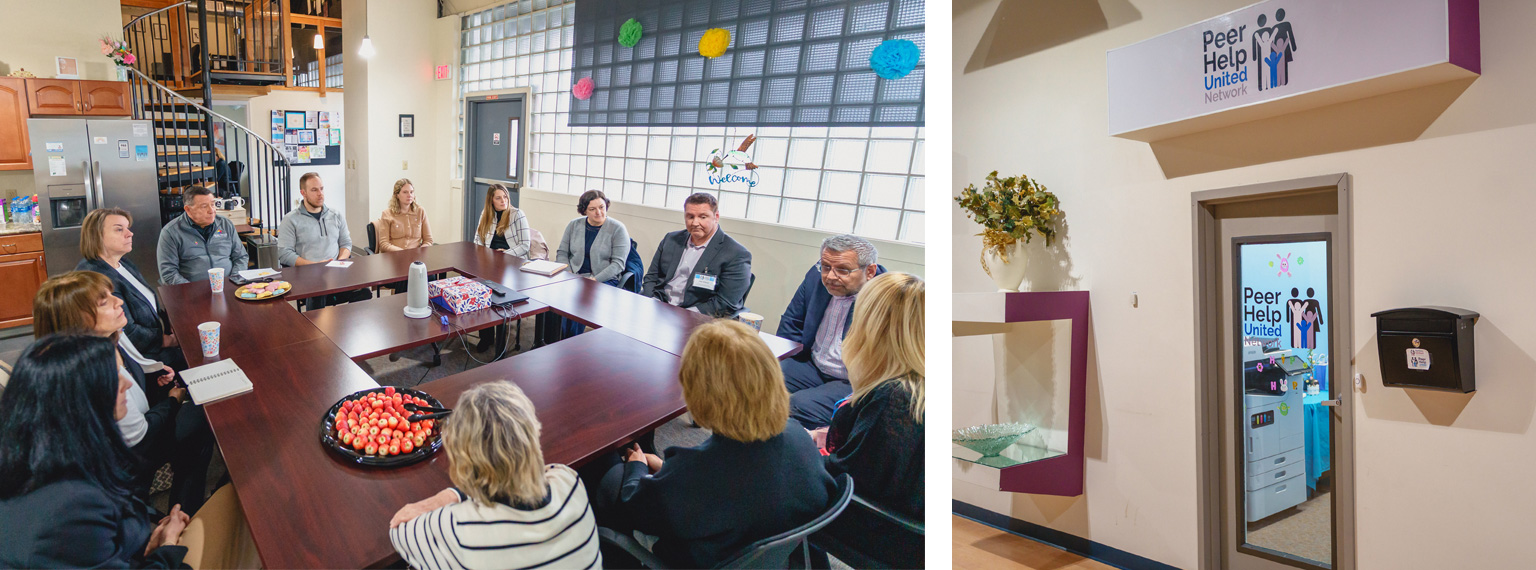
NEPA’s well-documented shortage of mental and behavioral health providers strains individuals, families, and communities. While access to timely, appropriate care remains a challenge, most predict the gap between needs and available services will continue to widen. In response, Peer Help United Network (PHUN)—a small but rapidly expanding organization—is deploying a peer-led approach to support individuals and families navigating a complex mental and behavioral health care system.
PHUN’s model is rooted not in traditional clinical hierarchies but in leveraging shared life experience. A short year ago, PHUN was little more than a good idea. Today, it employs 10 team members, including Family Peer Supports and Certified Peer Supports. PHUN is the first and only family- and peer-run agency in Pennsylvania, a distinction that reflects both its forward-thinking nature and human-centric mission. Team members are not only formally trained in support techniques but have also personally raised a child within the behavioral health system—navigating everything from routine therapy appointments to school-based interventions and interactions with friends and other families. At its core, PHUN centers on a sensible premise: those who have navigated the regional behavioral health system themselves—raising children with complex needs, managing individualized education plans, and coordinating care across fragmented systems—are uniquely positioned to help others do the same.
In behavioral health systems, experience-based peer support can be perceived (and utilized) as a supplemental add-on to clinical care. In contrast, PHUN’s approach honors peer support as a valuable, integrated component of the broader care plan. Bobbi Jean Bair, Director of Peer Services and PHUN’s first employee, said, “Our staff knows how to manage IEPs, work with mental health organizations, and advocate effectively because they’ve done it themselves. They pull from their own experiences but also go through extensive training to support families in a comprehensive, structured way.” Plus, as the regions’ service providers and organizations shift and change, PHUN’s team is committed to growing their personal and professional networks, connections, and resources.
The PHUN team operates on a strengths-based approach to care. Rather than prescribing solutions, peer specialists work with families to identify goals and build actionable plans. “We don't tell anyone what to do,” Bair shares. “Instead, we look to our clients to tell us what they want and need to work on.” While the team is supportive and open to clients’ perspectives, peer specialists are always honest. Sometimes, client-identified goals require a bit of recalibration. For instance, a young person may say they want a dog, but, through guided conversation, the focus may shift to more crucial, foundational steps such as securing a job, building social skills, or strengthening communication with a therapist. PHUN’s staff guides these conversations with a blend of empathy and expertise. They are mindful not to dictate what any client or family “should” do.
PHUN’s Executive Director, Joe Kloss, highlights the team’s role in helping clients navigate a maze of providers, programs, and eligibility requirements across a fragmented behavioral health care system. PHUN’s peer specialists go beyond referring individuals to services. “They’re not just shepherding people to appointments. They’re helping determine what types of services are actually needed, building a plan, and then supporting families every step of the way.” Kloss’ background within Luzerne County’s system of care has certainly helped to shape his perspective about the importance of defined, peer-led services. “Sometimes a peer’s role can get blurred in a behavioral health agency,” he said. “But when you really leverage their lived experience and passion in the right way, it creates a true culture of collaboration—not just internally, but with external partners as well.”
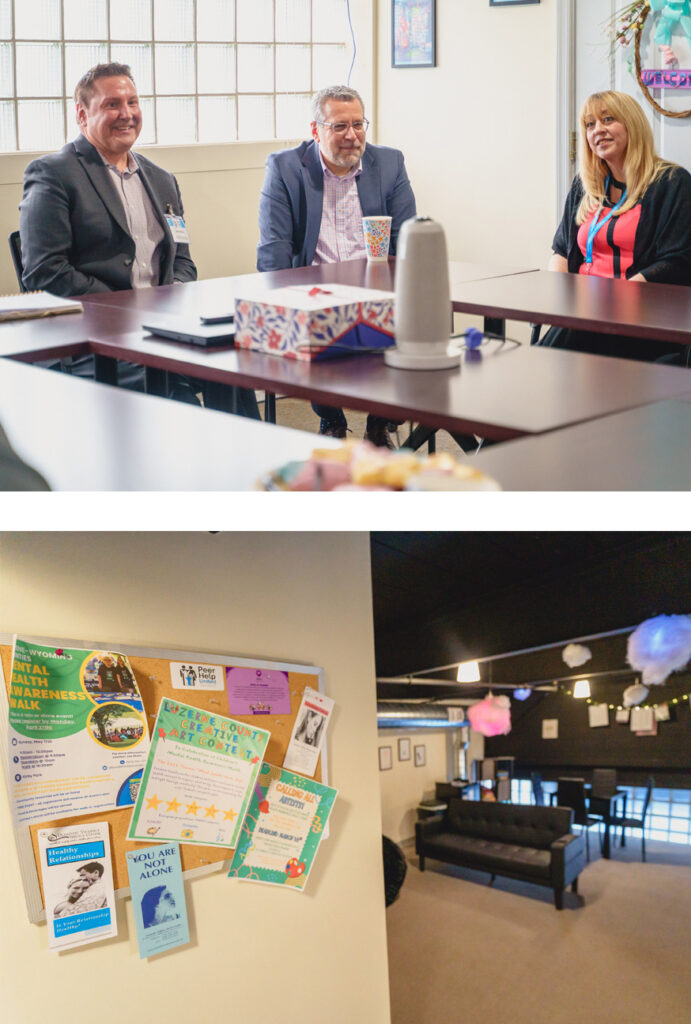
Beyond peer-led, one-on-one support, PHUN is also investing in community-based programming that meets families where they are. Team members host 90-minute group sessions for parents and caregivers to share experiences, build connections, and learn from one another. Many participants say that these sessions—complete with on-site childcare to ensure full participation—are just as valuable as formal services.
PHUN currently offers bi-weekly groups for young people aged 14 to 18 and plans to expand group availability to adults up to age 25. Sessions focus on practical, transitional skills such as completing job applications, cooking, doing laundry, and following up with employers. The goal is to help participants manage their mental health and also learn to live independently and confidently. PHUN’s upstairs youth lounge is a simple, welcoming environment for connection and growth. Adjacent to the lounge, clients of all ages can discreetly access the clothing closet and life-needs pantry, which includes baby formula, women’s shoes, educational games, hygiene products, clothing, winter coats, and more.
Ron Simon, LCSW, CEO of Families United Network (a Pennsylvania-based provider of private foster care, voluntary child welfare agency, and fiscal sponsor of PHUN), credits Moses Taylor Foundation for recognizing the value of peer-driven models. He also acknowledged the Foundation’s early support and highlighted it as “being on the front end of supporting family peer work.” Simon expressed sincere gratitude for the partnership and the Foundation’s continued willingness to invest in new types of community-based solutions.
While research increasingly supports the positive impacts of peer-driven care, PHUN operates within a challenging funding landscape. The organization relies heavily on program-based funding, including support from the Substance Abuse and Mental Health Services Administration (SAMHSA) and regional funders.
“The vision is growth,” Simon said. “Over the next two years, the Commonwealth should be releasing a program and certification to allow peer services as a billable Medicaid service. When it becomes billable in Pennsylvania, we want to see one family peer in all adoption and foster care cases statewide.”
PHUN’s leadership is also focused on reintroducing National Alliance on Mental Illness (NAMI) programming to Luzerne and Wyoming counties, further expanding access to education and support. Bair also introduced a standing monthly professional peer networking meeting, which brings together individuals from across the region to share knowledge, resources, and best practices. This kind of intentional integration is largely a grassroots effort, and it is gaining traction. Bair and the PHUN team met with nearly every school district and administrator in its service area, laying the groundwork for more widespread collaboration to support young people and families.
Leadership is also working to expand client access to “The Triple P: Positive Parenting Program,” an evidence-based curriculum. Due to cost, Triple P is typically limited to families involved with child protective services cases. PHUN offers Triple P whenever families need it, not just after they become involved in the child welfare system. Leveraging education to boost parental confidence aligns perfectly with the strengths-based approach PHUN deploys across all peer-to-client interactions.
Operationally, PHUN’s team is not peripheral. They describe themselves as “literally sitting at the table as equal partners” alongside clinicians, administrators, and decision-makers during critical conversations. Outside of supporting their clients, the team is actively invested in each other’s long-term professional success and mental well-being, integrating “no-copay Fridays” where they can unwind with each other, talk through challenging situations, or just be still to shake off the stress of the week.
PHUN’s model offers a glimpse into a human-centric system that values lived experience and operationalizes connection. “We’re trying to make sure people feel supported, understood, and empowered,” shared Bair. “Because when you’ve been through it yourself, you know how much that matters. Peer services aren’t just helpful. They are essential.”