A visit to the local barbershop, salon, or tattoo shop isn’t always just about aesthetics. Relationships between clients and their service professionals run deep, creating space for authentic connection and vibrant conversation. The chair can become a trusted space where conversations about family, work, relationships—and more sensitive topics like money issues or mental health needs—naturally unfold. The majority of people feel safe enough with their barber or stylist to let their guard down, oftentimes sharing thoughts and experiences they have not—and will not—discuss with anyone else.
Community Care Behavioral Health (CCBH)—a nonprofit behavioral health managed care organization based in Pittsburgh—recognizes the unique role Black barbers, stylists, tattoo artists, and cosmetologists play within their communities as well as the racial disparities in behavioral health care access and engagement. An estimated one in three Black Americans who need mental health services receives care. In response, CCBH partnered with Moses Taylor Foundation to integrate the Our Health Access Initiative for Recovery (Our HAIR) program into Luzerne, Lackawanna, and Monroe Counties beginning in October of 2025.
Rather than expecting individuals to identify a behavioral health challenge and seek mental health care on their own, Our HAIR recognizes the need for non-traditional pathways and embraces a different philosophy: share mental health information through trusted, trained Wellness Ambassadors and within spaces where people are already comfortable. Especially in Black communities, the neighborhood barbershop or salon is a familiar, welcoming environment. Relationships built on years of trust can create a safe space for open, honest conversations—in-the-chair chats that can make a lasting difference.
Stylists and barbers who choose to participate in the Our HAIR program receive specialized training to recognize signs that a client may be experiencing depression, anxiety, trauma, substance use disorder, or other behavioral health concerns. They learn how to ask specific questions and naturally shake up the stigma surrounding mental health—one conversation at a time. Wellness Ambassadors are also trained to identify warning signs of suicide and safely administer Narcan, a lifesaving opioid overdose reversal medication.
To date, 112 Pennsylvania-based Wellness Ambassadors have completed the training. Twenty-two Ambassadors are active within eight NEPA neighborhoods, while 84 serve in Allegheny County and six are based in Chester County.
The Our HAIR initiative never intends to turn barbers and stylists into counselors, first responders, or clinicians. It does, however, leverage the trust and accessibility of the client-stylist relationship to reach individuals who may not initially seek clinically-based resources on their own. This program highlights that meaningful improvements to a community’s mental health can—and do—happen outside of the walls of a medical facility.
While diverse in their style, delivery, and approach, all Our HAIR Wellness Ambassadors are committed to this work.
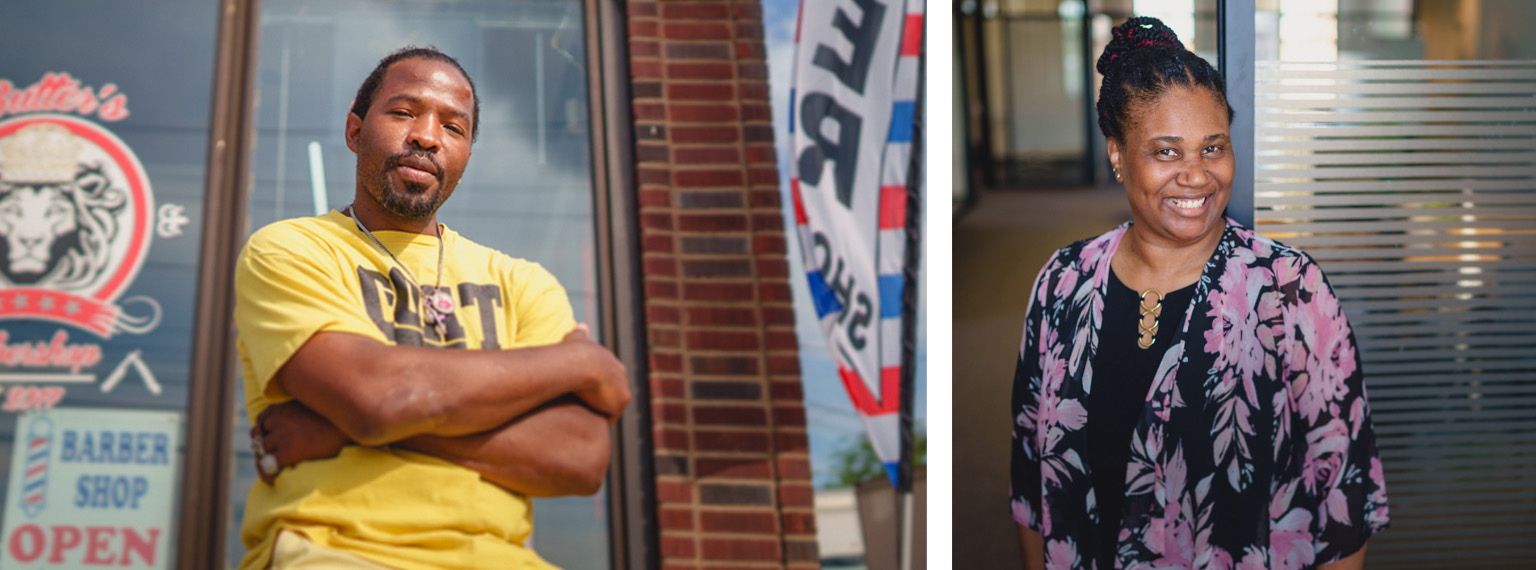
Jerome Williams, a barber at Butter’s Barber Shop in South Scranton and Our HAIR Wellness Ambassador, is open about his own experience with suicidal thoughts in the past—as well as his intentional road to serenity through personal reflection, support, and faith. A self-described “open book” when it comes to mental health, he is acutely aware of the struggles experienced by individuals in the community. Williams is prepared to respond with care, drawing not only from the training but also his own experiences. “It’s easy to get caught up in the negativity and busyness of life,” he shares. “Everything is moving so fast. Sometimes we don’t know how to sit still and listen—really listen—to each other. Service is in my heart, but being in this program has shown me so many new ways to help.”
He recounts a conversation with a client who casually mentioned significant frustration with his wife. Williams’ ears perked up, and he asked his client a few more questions. They brainstormed different ways to work through specific frustrations and talked through strategies to maintain emotional composure in stressful situations. “No one has to figure things out alone. We have to lean on each other and learn how to see the good. I am providing a service in cutting hair at the shop, but I really hope to serve people in whatever way they need me to. The best thing I can do is help someone choose peace and love.”
Our HAIR was not launched to replace clinically appropriate medical care. However, the initiative highlights the often untapped power of a community-based response and leverages the Wellness Ambassador’s boots-on-the-ground role: to open conversations, serve as a first line of response, recommend real-time resources, and help connect clients with mental and behavioral health professionals as needed.
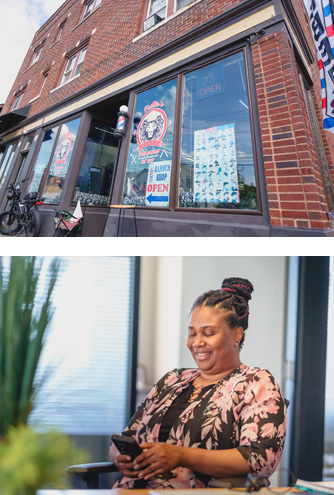
Pat Garcia, a cosmetologist and stylist in Luzerne County, recently participated in an Our HAIR trainee cohort. Although she has deep roots in the community and considers herself well-informed about local resources and events, she was “blown away” by what she learned during the training session. “There is so much more support here than I realized,” she shares. “And now that I know, I spread information to anyone who will listen. Even becoming aware of which words to use or avoid was so valuable.” Garcia adds, “I always say that I’m a student of life, and knowing what I know now has made me even more observant and aware. I’m confident that I will be able to recognize when someone is in trouble. And I’m so glad I’ve been trained to help.”
Lisa Savero, Senior Program Officer at Moses Taylor Foundation, added, “The Wellness Ambassadors continue to bring such incredible energy and commitment to this work. In this profession, clients regularly share feelings of overwhelming stress, grief, and anxiety. Our HAIR equips trainees with practical tools and confidence to thoughtfully respond to the person in their chair. And even more than that, we hope this initiative highlights that every one of us can play a part in building a responsive, connected, community-based network for better health.”
Building on the program’s first-year success, CCBH plans to expand Our HAIR in September 2026 to engage additional Wellness Ambassadors in the Latino community.