Northeastern Pennsylvania continues to be shaped by its hardworking, resilient community with a deep pride of place. People choose to stay or “come home” to build their lives and careers in a region that blends connection, opportunity, and affordability.
NEPA’s “eds and meds” institutions—its universities and health care systems—serve as anchor employers and significant economic drivers. These institutions are critical to stabilizing the local economy, ensuring that even during periods of broader uncertainty, NEPA is centered on a steady economic ground.
Despite the existing opportunities, NEPA’s workforce faces notable challenges, including rising child care costs, transportation barriers (especially in rural areas), and benefits cliffs, which can make career advancement financially risky. Transitioning from education and training to a family-sustaining job can also be difficult, as current, fragmented pathways are not truly aligned across education, employers, and support systems.
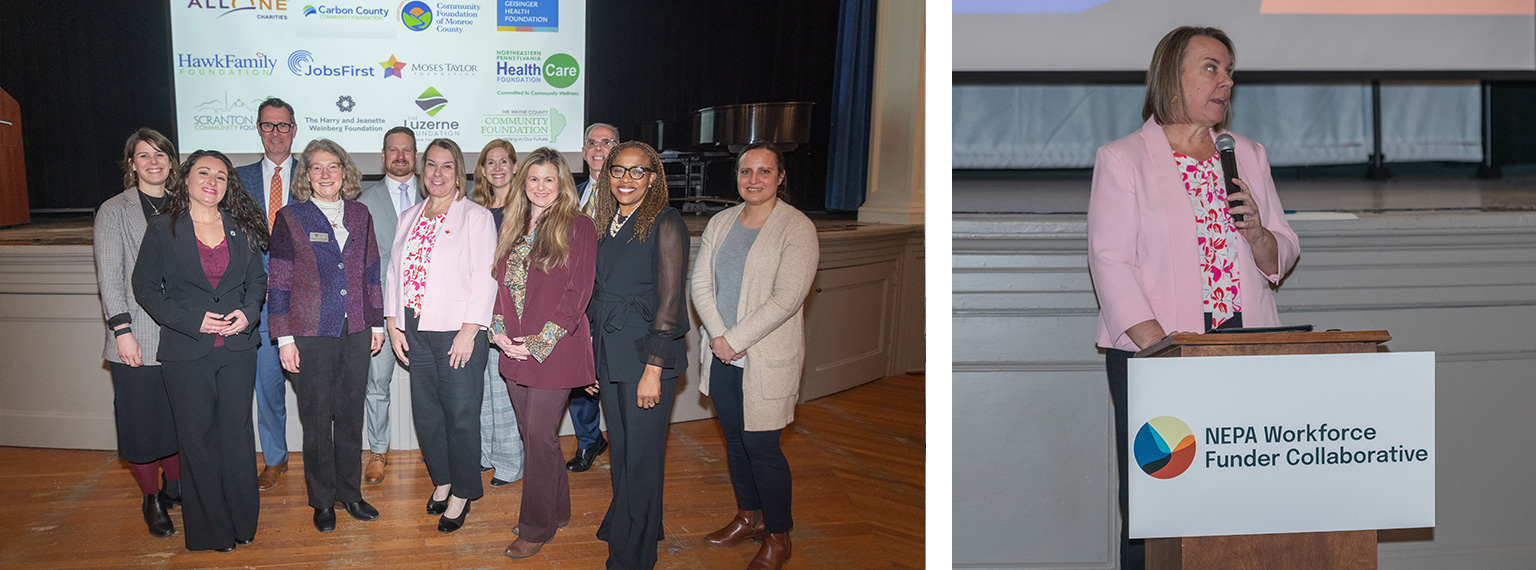
The NEPA Workforce Funder Collaborative, which officially launched on March 3, was designed to address those exact challenges head-on. The launch marked a milestone in a process that has been years in the making. Since the Collaborative’s first official meeting in the fall of 2024, the local philanthropic community, workforce leaders, and regional partners have convened consistently to learn, plan, and build the structure needed to guide long-term, regional workforce investments. Participants have worked together, and not in siloes, to understand the education to employment ecosystem, connect beyond individual priorities, and invest in scalable solutions that no single organization can build alone.
With a mission to coordinate resources for a stronger, better connected workforce in Northeastern Pennsylvania, the NEPA Workforce Funder Collaborative is the largest coordinated philanthropic effort to date focused squarely on workforce development, with 12 founding funders and partner organizations. The Collaborative will serve as the structure to guide participants’ shared work into the future.
Danielle Breslin, President and CEO of Moses Taylor Foundation and co-chair of the Collaborative, spoke at the launch event. She shared, “This level of commitment from the outset is remarkable, and truly speaks to our collective desire to make a meaningful impact on the workforce ecosystem in our region.” This initiative embeds collaboration and sustainability into regional infrastructure, allowing for continued progress even as funding cycles, leaders, or programs change.
Regionally-aligned investment priorities will center on coordinated, cross-county education, workforce, and industry efforts. The Collaborative will bring more accessible professional development opportunities to communities for local upskilling; help grow, keep, and advance homegrown talent for in-demand roles; and invest in supports that allow stability to advance, such as aligning child care, transportation, housing, and benefits so career growth does not result in financial risk.
Laura Ducceschi, President and CEO of the Scranton Area Community Foundation, is also serving as co-chair of the Collaborative. At the launch event, she highlighted the “shift toward alignment, partnership, and shared strategy, bringing funders, employers, and workforce partners together to strengthen talent pipelines and expand opportunity.”
Partner organizations include: AllOne Charities; Carbon County Community Foundation; Community Foundation of Monroe County; Geisinger Health Foundation; The Harry and Jeanette Weinberg Foundation; The Hawk Family Foundation; JobsFirstNYC; The Luzerne Foundation; Moses Taylor Foundation; NEPA Health Care Foundation; Scranton Area Community Foundation; and Wayne County Community Foundation.
Participating philanthropic partners will collectively fund initiatives to create real pathways to family-sustaining wages, economic stability, and opportunity for all. Along with generating meaningful impact in the near term, this collective funding strategy also signals to regional, state, and national funders that this Collaborative is ready to act and is open to connecting with additional partners also committed to advancing this work.
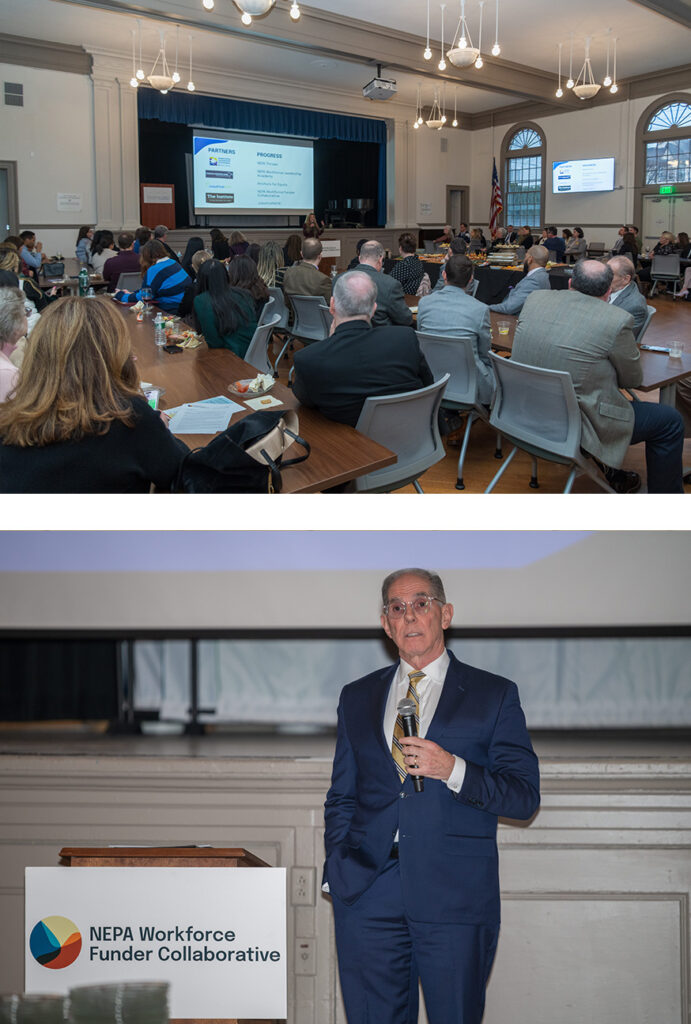
The Collaborative has prioritized health care as its first area of investment. At the event, Breslin highlighted the emphasis on “key high-need positions, including certified nurses aides, medical assistants, dental assistants, and medical technologists” and alignment with the work of Anchors for Equity, a two-year regional workforce research initiative led by the Federal Reserve Bank of Philadelphia and The Institute. By focusing first on health care—one of NEPA’s most vital and stable sectors—the Collaborative will strengthen not only the workforce but also the broader regional economy.