In February 2025, Moses Taylor Foundation approved a grant of $494,200 over three years to pilot the travel school nurse program at the Northeastern Educational Intermediate Unit 19.
Moses Taylor Foundation contracted with The Center for School Health Innovation & Quality in 2022 to examine school nurse staffing and funding challenges in NEPA. The research also explored unique models to address staffing pressures, workload demands, and challenges related to adequately funding the school nurse role.
While the pain points were clear, so was the opportunity for pragmatic action. In 2024, Moses Taylor Foundation partnered with the Northeastern Educational Intermediate Unit 19 (NEIU 19) to develop a Travel School Nurse Pilot. This pilot focused on providing multiple districts in Lackawanna County with access to a reliable, flexible, and experienced substitute school nurse comfortable delivering and managing care in a school-based setting.
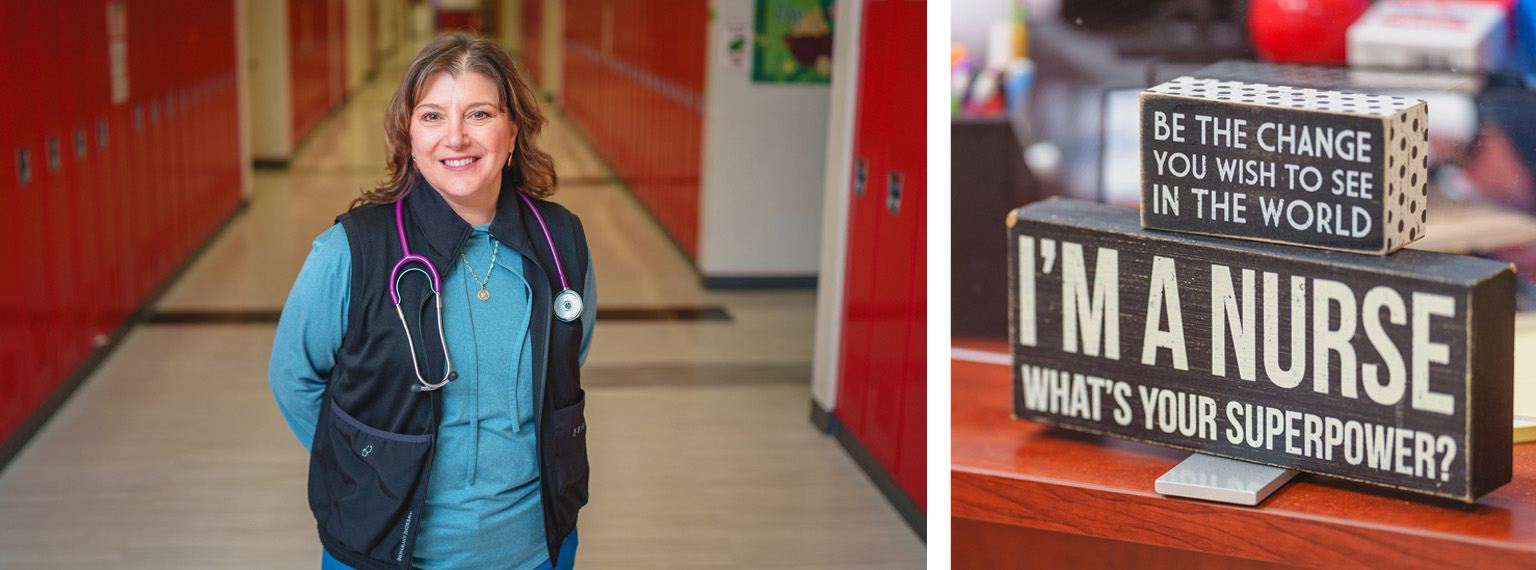
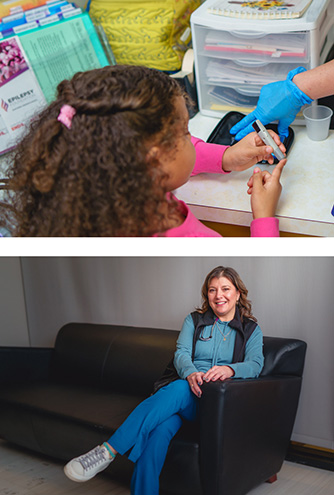
Theresa (Terri) Cesarini, RN, accepted the newly created Travel School Nurse role for the 2025-2026 academic year and has been central to this pilot since she came on board. Terri steps in when school nurses need to schedule time off or stay home when they’re unwell—offering peace of mind that students will continue to receive skilled care. Her role also extends beyond coverage for absences. She assists during high-volume periods, supports Certified School Nurses as they complete state-mandated in-school screenings, and provides nursing coverage for field trips and off-site student events.
Terri brings extensive knowledge of state health regulations, emergency care protocols, and the specialized training required to support school-aged children. As a traveling school nurse, she approaches each day with humility, kindness and gratitude, no matter her location. “I’m so blessed to be in this role, and I just love working with the students. Being around young people and supporting other seasoned Certified School Nurses is really fulfilling. School nurses manage much more across a single day than most people can imagine,” noted Terri.
Since the start of the school year, Terri has had a placement every single day, providing critical coverage to multiple districts across Lackawanna County. The demand alone highlights how acute the need for substitute school nurses has become—and how valuable an aligned, regional approach can be.
Along with ensuring consistent access to qualified, in-school care for students, the Travel School Nurse Pilot Program has introduced much-needed flexibility for school nurses. As outlined in the School Nurse Staffing and Funding in Northeastern Pennsylvania report, many school nurses indicated they do not take days off—even when they are not feeling well—because an absence could leave their school without a nurse. However, with access to a travel school nurse, school nurses in participating districts feel confident that students in their buildings are receiving care from a qualified professional who understands the school-based health setting, rather than a nurse from a staffing agency who is unfamiliar with the nuances of in-school care. Along with providing coverage for unanticipated days off, Terri has also been available to support participating districts during peak periods or in anticipation of longer, temporary, and pre-planned school nurse absences.
Financially, this pilot has proven to be a cost-effective alternative to traditional staffing models. The travel school nurse is employed centrally by NEIU 19, and the Foundation funds the position. Operationally, pooled resources and cross-district collaboration are far more efficient than each district scrambling to fill school nursing gaps independently. As a shared resource, Terri’s day-to-day placement varies across participating districts based on real-time needs.
The first year of the pilot will end in June of 2026, and early feedback has been overwhelmingly positive. School nurses report reduced stress when taking time off, administrators appreciate the reliability and quality of coverage, and students benefit from having a school nurse who understands educational environments and expectations.
While similar travel school nurse models have worked in other parts of the country, this pilot is the first of its kind in NEPA. The initial success highlights the benefits of proactive, data-informed solutions—and the power of partnerships between foundations, intermediate units, district leadership, and administrators. Stakeholders are hopeful that school districts will be willing to cost-share and maintain the travel school nurse position after the three-year pilot ends in 2028.
Danielle Breslin, President and CEO of Moses Taylor Foundation, noted, “While we recognize that no single organization can solve health care workforce challenges or meet the complex needs of young people alone, shepherding the Travel School Nurse Pilot from an idea to a meaningful program has been particularly rewarding. The collaboration between invested partners and school districts—and the initial data—certainly tells a promising story.”
The travel school nurse pilot was covered by WVIA in a February 2026 article titled “Travel school nurse program helps ease shortage in Lackawanna County schools.”. Theresa (Terri) Cesarini was highlighted in the May 2026 issue of Happenings Magazine as part of its “Thank You Nurses” section.