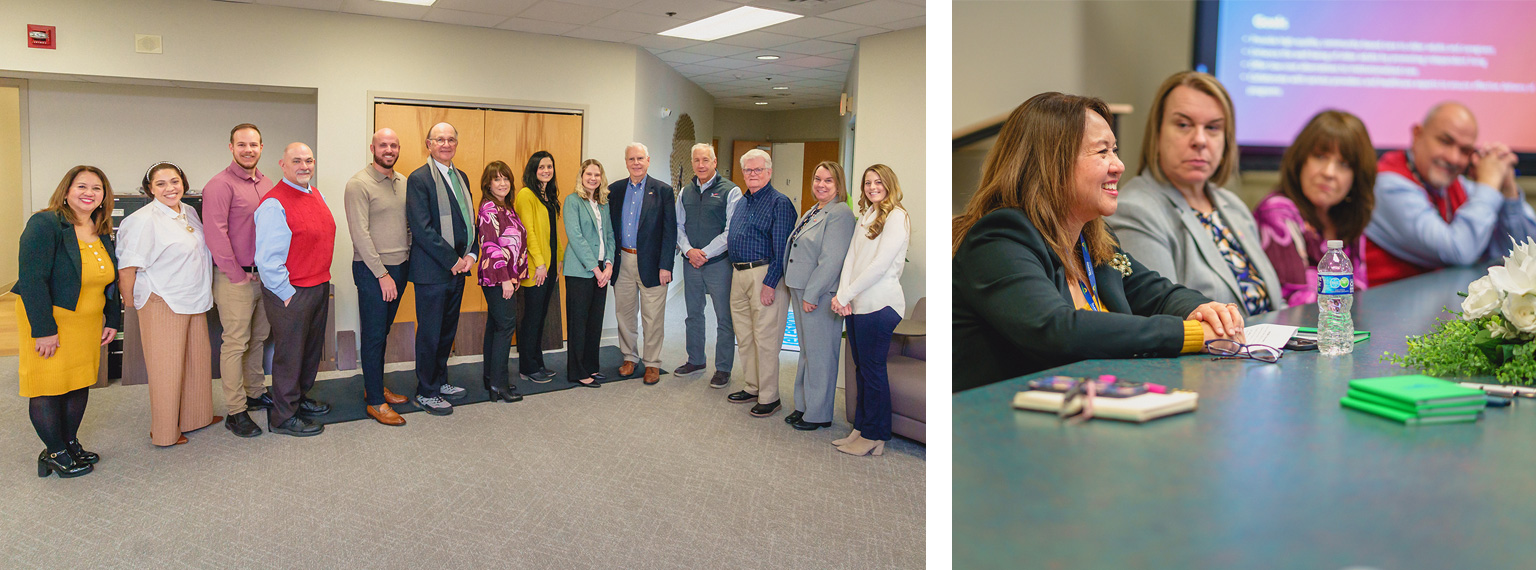
For more than 50 years, Telespond Senior Services has remained true to its mission of “providing life-enriching services to older adults and their families on a community-wide and individual basis.” The nonprofit primarily serves residents in Luzerne, Lackawanna, and Wyoming Counties, operating an adult day center, providing in-home personal care aides, and overseeing AmeriCorps’ Senior Companion and Foster Grandparent Programs. Helen Schmid, Telespond’s President & CEO, says the team strives to “offer the best aging experience to our elder neighbors in this community.”
In line with this lofty goal, Telespond’s most recent strategic and needs-responsive endeavor is its Older Adult Advocacy Center (OAAC), designed to provide support and services for adults 60 years of age and older who have been victims of abuse, neglect, or financial exploitation. The OAAC is a collaborative project with the Pennsylvania Department of Aging, local Area Agencies on Aging, and a variety of multi-disciplinary partners and funders across Northeastern Pennsylvania.
Offering emergency respite and short-term transitional living space for older adults in crisis, the OAAC operates with a team-based approach—providing forensic, medical, and competency evaluations; personal care services; senior companionship; legal services; transportation assistance; and more. Its purpose is twofold: to help guests safely navigate challenging situations and to provide them with the necessary resources and support for independent living in the future.
The OAAC’s director, Cliff Miller, came on board in November 2024. He is proud to have “dedicated his whole life to helping others” and blends his professional experience with an eagerness to jump into the unknown. On Cliff’s first day, he walked into the empty 2,000-square-foot addition to the existing Telespond Senior Services building—a literal blank slate, except for his desk and laptop wrapped in a bright bow. He smiles when reflecting on the many opportunities over the past year to “create something meaningful” in Lackawanna County.
Between June and November 2025, the OAAC received 15 referrals and welcomed nine guests, including seven high-need individuals who were stabilized through coordinated care and housing support. Stays have ranged from 4 to 87 days, with an average length of 41 days.
The longer stays at the OAAC allow guests and staff to build deeper relationships. Over time, the team can better understand a guest's immediate needs, situation, and circumstances and connect them to the most appropriate resources, most of which center on core needs: housing, food and nutrition, transportation, health, and legal services. A guest may enroll in Meals on Wheels or receive crisis intervention, mental or behavioral health services, hygiene items, or clothing. Some receive hearing, vision, or dental evaluations, while others get help with insurance, SNAP benefits, or replacement birth certificates and social security cards.
Telespond’s team also helps with technology, specifically cell phones and emails, which can be especially stressful for older adults. Many government-based digital forms, processes, and verifications can only be completed online. While not every guest needs every kind of support, the Telespond team strives to creatively meet as many as possible.
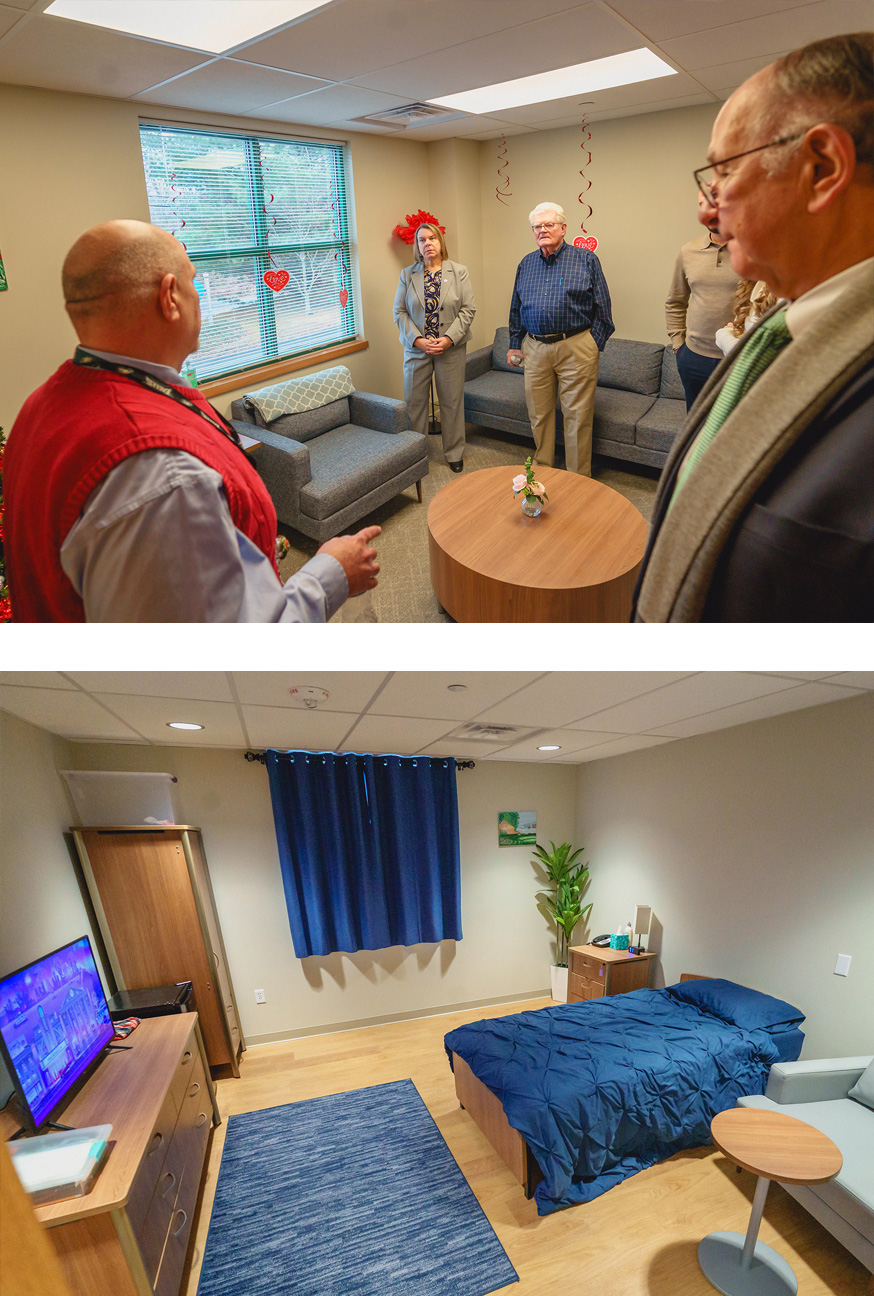
The OAAC includes four one-bedroom units, a medical station, handicap bathing facilities, a lounge, a small kitchenette, and a staff office. With 24/7 key-card access to the building, guests are encouraged to remain independent and stay in their own routine. They manage their own needs and can come and go as they like, order take-out, welcome visitors, and keep their car (if they have one) in the parking lot. The rooms are color-coded and easily recognizable, with matching walls, linens, and wall art to echo a sense of consistency and security. The doorless staff office reflects a purposeful design choice to promote interaction and connection.
Cliff is deeply committed to the OAAC’s mission and mentions, “We want to help our clients return to independent living. And honestly, sometimes I think the least important thing here is the bed. It’s the support, the care, the ability for us to make stronger connections and really see our clients as capable individuals. That’s where the value is.”
More than 1,200 elder abuse cases are investigated annually in Lackawanna County; however, nearly 90% of abuse goes unreported. The OAAC is a meaningful, tangible response to a persistent and hidden community crisis—and the first of its kind in the Commonwealth. Referred guests can stay for as long as needed at no cost. Through collaboration with a multitude of community partners serving older adults, including the local Area Agencies on Aging, the Lackawanna County Elder Justice Multidisciplinary Team (EJMDT), and local law enforcement, the OAAC is emerging as the physical hub for a collaborative, cross-organizational approach.
Telespond serves a growing population, and its mission strongly aligns with one of the Foundation’s focus areas: Older Adult Health. Helen lights up when referring to Christine Marcos, Moses Taylor Foundation’s Senior Program Officer, as a “dial friend”—someone she can brainstorm new ideas with and talk through challenges, large or small. Helen “doesn’t have to put on a show” and finds the Foundation's leadership to be interested in and open to new approaches.
Over the past decade, Moses Taylor Foundation has invested more than half a million dollars into Telespond Senior Services, earmarking its most notable contribution toward the OAAC in 2022. However, with the Foundation’s support, Telespond has also contracted with a professional grant writer, engaged in financial planning, and implemented grant-specific accounting software.
Along with organizational support, Helen eagerly highlights how the Foundation’s responsive nature has affected the lives of Telespond’s clients. When the federal funding pause and state budget impasse halted grant-based payments, Telespond’s federally-funded Foster Grandparent Program was at risk of shutting down. The more than 70 volunteers in the program are on a limited income and depend on the modest, tax-free stipend they receive. In the midst of this operational crisis, Moses Taylor Foundation stepped in, allowing Telespond to retain its program director and all volunteers. Helen shares, “It’s just one example of how the Foundation keeps coming through for us. It was a tremendous help in a tough time. Not having to let anyone go and being able to continue these services…we were all so grateful.”